- E-mail: kontakt@srebrnamennica.pl
- Phone: 664 253 104
- Platinum: zł6,073.08
- Gold: zł15,930.87
- Silver: zł203.60 (pln/ounce)


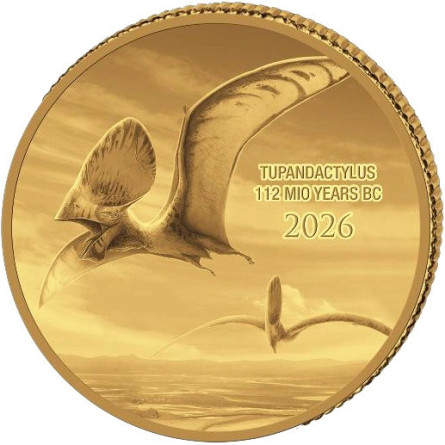

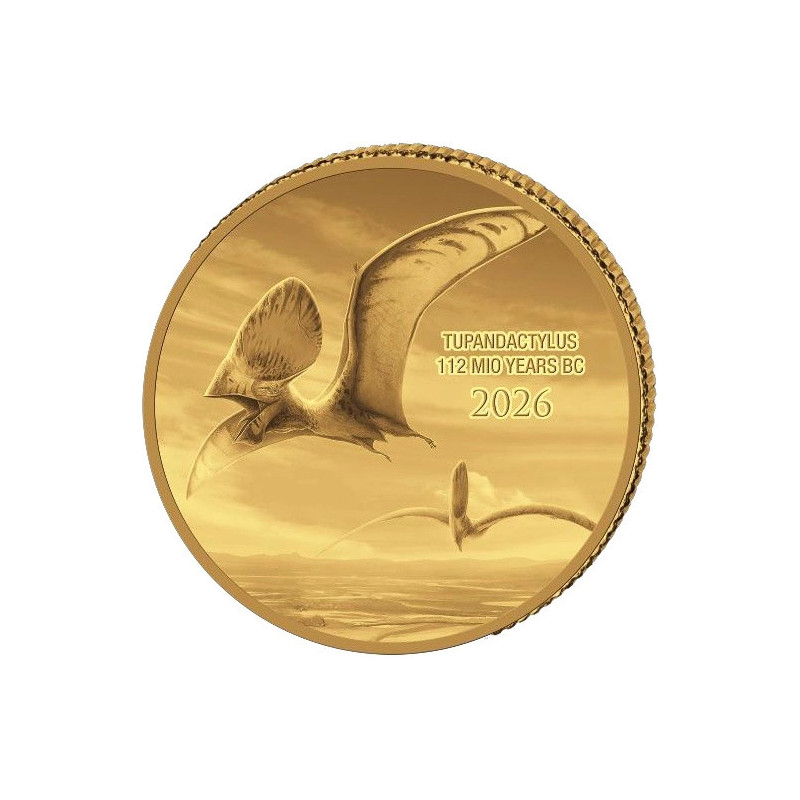
Prehistoric Life Gold Coin: Tupandactylus 2026, 0.5 gram
The Flying Tupandactylus is set to be the hero of the next installment in the series.
Shipping: 90 working days
"Prehistoric Life" is an interesting series that introduces us to the Earth's ancient inhabitants.
Tupandactylus belonged to the group of pterosaurs—reptiles adapted for active flight—that inhabited the Earth long before the first birds appeared. It lived about 112 million years ago, during the Early Cretaceous, in what is now Brazil. Its most remarkable physical feature was a large crest on its head, which gave it a distinctive appearance and set it apart from many other members of this group. The crest consisted of a bony base and an extensive membranous structure, and its primary function is believed to have been signaling and visual display, particularly during courtship behaviors. Unlike many pterosaurs with a more predatory diet, Tupandactylus had a short, toothless beak, likely adapted for consuming plant matter. Its diet may have included fruits, seeds, and other accessible plant parts, making it an interesting example of the diversity of lifestyles among prehistoric flying reptiles.
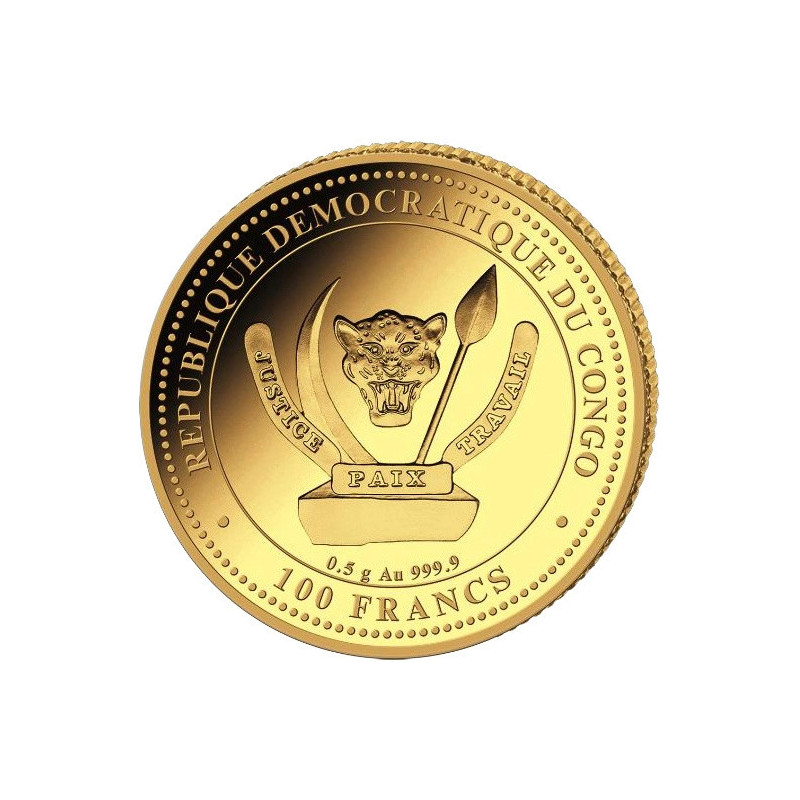
The reverse of the coin depicts Tupandactylus in flight, with outstretched wings and its distinctive crest clearly visible. A second specimen is depicted in the background, giving the scene a more expansive feel and evoking the environment in which these animals may have lived. The name of the series, PREHISTORIC LIFE, appears at the top of the design, while the species name, TUPANDACTYLUS, is shown below. Additional markings indicate that the depicted creature lived approximately 112 million years ago and specify the year of the coin’s issue—2026. The edge of the reverse is adorned with the names of geological periods, which refer to successive stages in the history of life on Earth. The obverse features the coat of arms of the Democratic Republic of the Congo, consisting of a leopard’s head, an elephant’s tusk, and crossed spears. Each of these elements is part of the official state symbolism and gives the design its distinctive appearance. Surrounding the emblem are the name of the issuing country and the motto “JUSTICE PAIX TRAVAIL,” which means justice, peace, and work. The remaining space is occupied by markings indicating the coin’s weight, the precious metal used, and its face value. The combination of the image of an extinct pterosaur with the official symbols of the Democratic Republic of the Congo creates an intriguing offering for collectors interested in paleontology and coins depicting extraordinary species from the distant past.
- Shipping
- 90 working days
- Metal
- Gold
- Sample
- 0,999
- Weight
- 0,5 g
- Diameter
- 38.6 mm
- Country of origin
- Kongo
- Issue year
- 2026
- Series name
- Prehistoric Life II
- Outlay
- 2.000
- Packaging
- Plastic protective cap
- Taxation
- VAT exempt
You might also like





Shipping: 30 working days


Shipping: 30 working days
Products in the same category





Shipping: 24h













Do you want to pay even less for shopping in our store?
Don't wait - sign up for our loyalty program today, collect points for purchases and exchange them for discount codes
