


A 10 groszy coin for thousands of zlotys? See the three most expensive Polish investment coins from the communist era and beyond, sought after by collectors
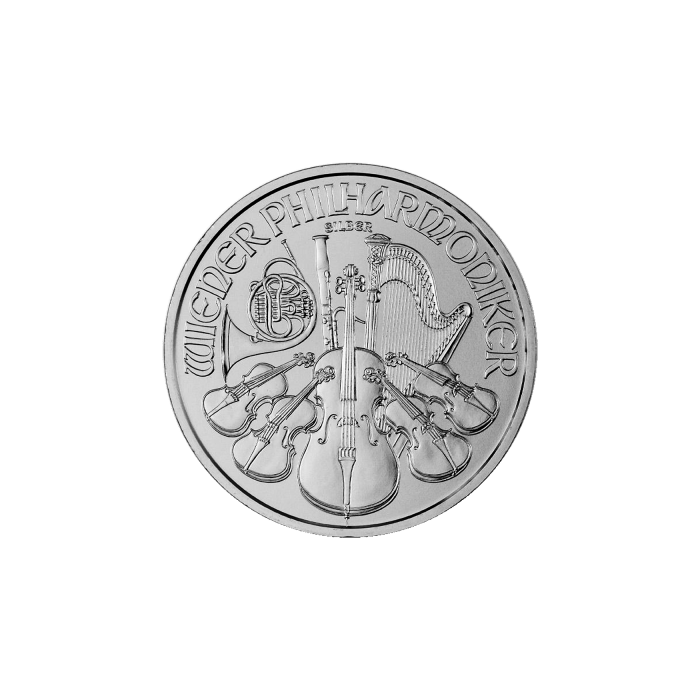
The Austrian Philharmoniker, the South African Krugerrand, the British Britannia - these coins certainly need no introduction to avid numismatic enthusiasts. They are timeless classics that delight collectors with their extremely detailed obverses. However, not everyone stops at buying publicly available coins. Some collectors dream of something more - that is, pieces that are so rare that they often take years to find. In today's post, we will describe the three most sought-after coins by Polish collectors. We invite you to read on!
The most expensive ten-penny coin of 1973
The famous dime from 1973 is one of the most sought-after coins by collectors. It is worth mentioning, however, that this is not a standard specimen that can be purchased for around PLN 3-5 on auction portals. As always with numismatics, the devil is in the details - and especially in those that are not there. A great example of this is precisely the 1973 dime without the mint mark. It is one of the most sought-after coins from the communist period, and its current value far exceeds the denomination minted on the obverse.
In 1973, 80,000,000 copies of the 10 groszy coin were minted and immediately entered circulation. The reverse bore the inscription ‘10 GROSZY’ and a graphic of a laurel branch girdled with a ribbon. The obverse, on the other hand, was decorated with the image of an eagle, the inscription: ‘POLSKA RZECZPOSPOLITA LUDOWA’, the number 1973 and the mint mark (a combination of the letters M and W from the Warsaw Mint). The copy we are discussing does not have this last element, which should be found in the claws of the bird's right leg. According to the National Bank of Poland, coins minted without the MW mark were unfit for circulation, which significantly increased their possible collector value.
The history of this coin is shrouded in great mystery. It was probably minted in Leningrad or Kremnica. In the 1970s the Warsaw Mint was engaged in the production of coins satisfying the minting circulation not only in Poland, but also in other socialist nations. For this reason, orders were often transferred to neighbouring countries. It is therefore assumed that the Leningrad Mint or the one in Kremnica minted a trial batch of dimes and then sent them to Poland. The coins, however, for unknown reasons, never entered circulation. They only saw the light of day in the 1990s, when the Bank of Poland decided to clean out its warehouses. Sealed tubes with the coins without the mark found their way to various numismatic shops all over Poland. It took many years, however, before there was a real buzz about a ten grosz coin from 1973, on which no mark was struck. Currently, the price of such a specimen in mint condition varies between PLN 10,000 and 15,000. The highest value achieved by this numismatic coin is more than PLN 20 000. This makes it one of the most valuable communist period coins in Polish history.
Due to the fact that the 1973 dime is one of the most popular coins sought after by collectors, there is quite a high risk of buying a fake. Numismatists have been warning for years against copies in which the mint symbol has been removed with sandpaper or a sharp knife. When buying this coin, it is therefore worth paying attention to whether the surface is reasonably smooth. Visual inspection requires the use of a jeweller's magnifying glass, good lighting and vigilance. If numerous scratches are visible on the obverse, it is likely that the mint mark has been removed. It is therefore worth consulting an experienced numismatist or looking around for this coin in authorised dealers.
A goddess among numismatic coins, that is, a five-dollar coin with the image of Nike from 1932
Numismatists - like all other collectors - have their personal preferences. Some have a taste for shiny gold, while others find beauty in silver that has become too shiny. However, most are unanimous as to which collector coin is the most beautiful and desirable. We are, of course, talking about the five-dollar coin with the image of Nike, vintage 1932, which is undoubtedly one of the most sought-after coins by collectors.
The coin was designed by Edward Wittig - one of the most outstanding Polish sculptors of the last century. Initially, the figure of proudly walking Nike was to be transformed into a monument. However, this project was not realised, but the goddess of victory was depicted on the five złoty coin. The obverse of the coin depicts the emblem of Poland, two numerals 5 on either side of the eagle, with the inscription ‘ZŁOTYCH’ and the year of issue below. The reverse is decorated with an image of the goddess Nike. It is surrounded by an inscription ‘RZECZPOSPOLITA POLSKA’ and a sequence of pearls. In turn, Edward Wittig's initials appear at the bottom right-hand edge. The entire design alluded to Poland's regaining of independence, which took place 10 years before the coin was issued.
Silver coins with the image of Nike are extremely rare. They were minted from 1928 in a standard mintage, satisfying the mint circulation of the time. The year 1932 in Poland, however, brought changes to the monetary system and with them new standards for two-, five- and ten-zloty coins. The coins in force at the time were replaced by smaller, lighter equivalents. The five-dollar coin with the image of Nike remained in circulation for two more years. Then - due to high inflation - 22.8 million pieces out of a mintage of 26.7 million were melted down to make new coins. The preserved 5 million nickel coins with Nike's image were dusty in Poles' wallets. Today, however, the coin is marked R5, which, according to the numismatic rarity scale, means that there are max. 120 copies. The price of one of them is approximately PLN 50,000, depending on the state of preservation. It is certainly the most expensive Polish coin in the history of numismatics.
Among collectors, five-dollar coins with the image of Nike with a layer of patina are paradoxically the most popular. It highlights the beautiful details of the reverse, such as the facial features of the goddess, the feathers on her wings or the pleats of her dress. In addition, the presence of patina means that the coin has not been tampered with in any way, demonstrating the originality of the piece. Of course, the effect of this deposit can be achieved with paint or ordinary dirt, but the trained eye of an experienced numismatist will immediately detect a fake. Considering that it is one of the most expensive old coins in Poland, it is definitely worth consulting an expert about its purchase.
Polish collector coins from 1957 - 1958 with ‘Rybak’ in good condition
It might seem that there are no trends in historical areas such as numismatics. Nothing could be further from the truth - various fashions can also be observed among enthusiasts of historical currency. For it happens that common circulation coins become more valuable for various reasons. One such example is the 1958 five-zloty coin with the image of a fisherman, referred to by numismatists as the ‘fisherman’.
‘Fisherman’ is one of the most sought-after communist coins by collectors. Surprisingly, this numismatic coin is not distinguished by anything special. The obverse depicts an eagle without a crown. It is surrounded by the inscription ‘POLSKA RZECZPOSPOLITA LUDOWA’ (THE PEOPLE'S REPUBLIC), and at the very bottom the date 1958 is minted. On the reverse there is an image of a fisherman dragging a net full of fish. To his right is the inscription ‘5 ZŁOTYCH’. This design was made by Wojciech Jastrzębski and Józef Gosławski.
Those interested in the history of the People's Republic of Poland may be surprised that such a common coin is so popular among collectors. After all, it was issued until 1974 and every Pole living at the time had seen it at least several hundred times. Yes, later ‘fishers’ are very common and in satisfactory condition can be bought or sold for around 5-10 zlotys. Of particular note, however, are copies that meet two conditions: they date from 1958 (i.e. the very beginning of circulation) and they are preserved in perfect condition. Any ‘fishers’ worn by circulation - i.e. with a blurred reverse or losses - are worthless to the numismatist, regardless of the date of issue. On the other hand, a coin in mint condition that has been stored, for example, in a cap or clasper, can reach a value of as much as PLN 8,000-10,000. ‘Rybak’ from 1958 is therefore one of the few circulation coins which, despite not having any errors or losses, can reach high price thresholds.
There are, however, ‘fishers’ that are unique - the so-called ‘snowman’. In order to understand the uniqueness of this coin, it is necessary to look closely at the obverse, specifically at the number 8 in the year ‘1958’. In the case of the ‘snowman’, it is much more rounded. The numeral 8 on the standard ‘fisherman’, on the other hand, is a classic lemniscate. ‘Snowman’ was created as a result of a minting error, which significantly increases the value of this five-dollar coin - even exceptionally worn copies can reach a value of more than 3,000 zlotys. Occasionally, the so-called ‘fisherman on grass’ is also encountered. This is a coin that has been struck with a damaged stamp, so that diagonal lines can be seen on the surface of the reverse. Numismatists have compared these to grass - and so the name ‘fisher on grass’ has come to be. A coin with this type of flaw can be worth around 1500-2500 zloty.
All these sought-after coins by collectors are desirable for completely different reasons. This is because numismatics values all kinds of anomalies, which add great value to exhibits. However, it is worth remembering to buy rare and valuable coins from a trusted source so as not to fall victim to fraud.
Where to check the value of gold coins minted in the People's Republic of Poland or earlier?
Of course, in the history of Polish numismatic coinage one can find many more gold commemorative coins, the prices of which can even reach tens of thousands of zlotys each. After all, one cannot forget about the denarius of Bolesław Chrobry, the two-zloty coin with Sigismund III Vasa from 1998 or the one-hundred-zloty coin with Pope John Paul II from 1986. However, it is worth remembering that not every coin minted in the times of the People's Republic of Poland is worth thousands of zlotys. Before putting a numismatic coin up for auction online, it is definitely worth contacting an expert. A numismatist or a mint employee will assess the value of a coin made of precious metals and suggest an appropriate price.