


Coins and banknotes are important building blocks of history. Many different conclusions can be drawn from old means of payment about how different societies around the world once functioned. It is therefore not without reason that numismatics has become one of the most important research disciplines in history and anthropology. What exactly are numismats? What is the difference between collector coins and bullion coins? These questions and many more will be answered in today's post.
What exactly is numismatics?
Nowadays, numismatics can be understood in two ways. By default, it is the study of money and legal tender in the broadest sense. Numismatics is an ancillary branch of history that involves the study of coins and banknotes from historical, technical and also aesthetic points of view. What money was made of, whose images were immortalised on it, where and when it was produced - all this information is extremely valuable in building up a picture of the everyday life of our ancestors. Numismatic historians classify, date and then assign coins and banknotes to their respective eras. On the basis of this, they also determine the possible users of a given monetary sign, which makes the interpretation of historical processes much easier.
Numismatics also has a second face. It is an investment method involving the purchase of collectible banknotes and coins. Numismatic enthusiasts are most interested in specimens with a rich history, often shrouded in mystery. Their availability is usually very low, which goes hand in hand with a high purchase price and an even higher selling price. Silver and gold numismatic coins with limited availability can therefore be a great way to invest capital.
Collectible numismats versus bullion coins - what's the difference?
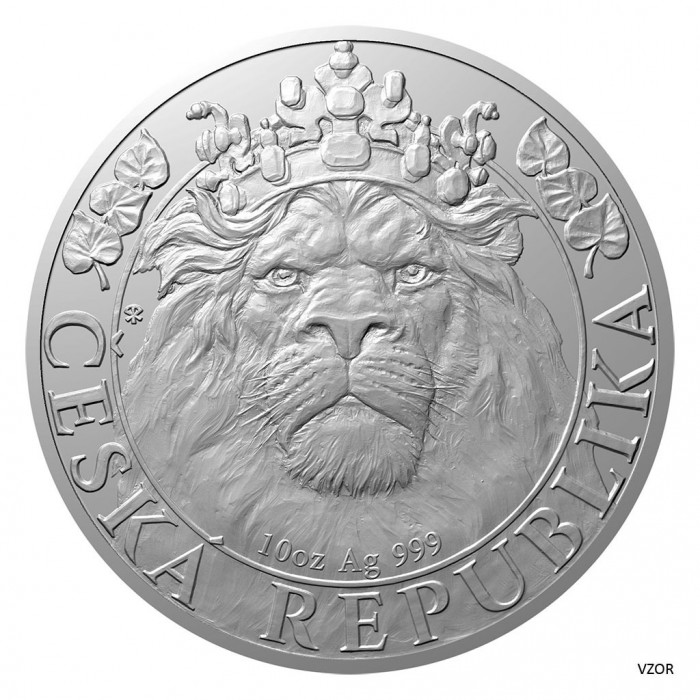
The word ‘numismats’ is often used as a synonym for bullion coins. However, it is worth bearing in mind that there is a very big difference between the two types of minted products. Bullion coins are full-fledged means of payment that can be used in shops and banks. Due to their collector value and aesthetic qualities, they are rarely used for this purpose. However, this does not change the fact that bullion coins have a declared face value, so that they can be used freely to pay for purchases or services. The valuation of this type of product is very simple - it is entirely dependent on the value of the bullion from which it is made. For example, if a bullion coin was produced from one ounce of gold, the profit from its sale will be as indicated by the rates. This type of minted product gains in value over the years and can be sold at any time at a bank, mint, precious metal showroom or to an individual.
The case is different for numismatic coins. These coins and notes have no use in the current minting system, which means that they cannot be paid for. The valuation process for numismatic coins is more complex than for bullion coins. Availability plays an important role here. The fewer numismatic coins on the market, the higher their value. Bullion is also important in the valuation of collector pieces. It is worth remembering, however, that some numismatic coins made, for example, of aluminium or steel, reach much higher prices than gold or platinum bullion coins. In our post on Polish numismatic coins, we wrote, among others, about the ‘fisherman’ from 1958, which in mint condition is often valued at as much as PLN 10 000. Here it is worth mentioning that the price of gold has been fluctuating between PLN 8000-8500 per ounce for some time. It therefore appears that an old coin made of aluminium can reach a price comparable to a precious metal product. Selling numismatic coins, however, is not as easy as with bullion coins - it requires good market knowledge, waiting for the right moment, and finding the right buyer yourself.
Investing in numismatic coins can prove to be a great way to invest capital. However, it is worth bearing in mind that the market for these investment products can sometimes be unpredictable and is extremely sensitive to trends. Different social, political or economic circumstances can have a huge impact on the rise or fall of interest in any particular specimen. While bullion coins guarantee a certain profit, numismatic coins require regular monitoring of various auctions and shop offers. For this reason, gold numismatic coins are popular among investors with a passion for history - for them, hours of research and searching are an opportunity to deepen their knowledge.
Is every numismatic coin valuable?
A common mistake of novice investors is to assume that any numismatic coin is valuable. However, it should be borne in mind that the age of a coin or banknote does not determine its price. The phenomenon of individual numismatic coins can be explained using one particular coin as an example - the 1957 zloty.
For some time now, a great commotion has been observed around this particular vintage - allegedly thousands of zlotys can be earned on it. Many investors, unfamiliar with the ins and outs of numismatics, therefore purchase the 1957 zloty, hoping to make a large profit. It turns out, however, that coins purchased for a pittance are worth... little more or exactly the same. What is the reason for this? Yes, the 1957 zloty is very popular on the numismatic market... but in perfect condition. It is one of the first coins produced from alupolon - that is, a very light metal alloy that is extremely susceptible to scratching, rubbing and patina coating. On the market you can find many gold coins from 1957, but the vast majority have so-called circulation marks. Exceptionally well-preserved specimens may fetch the price of about 600-800 zloty. On the other hand, coins with rust and scratches are sold for around 10-30 zlotys. Only in the case of a perfectly preserved numismatic coin in mint condition, an investor can expect a profit of approx. 4,000-5,000 zlotys.
Using the example of the 1957 zloty, it can be seen that numismatics is governed by its own rules. It is not enough to invest in the first better piece to enjoy profits. In the case of individual numismatic items, collectors may be looking for something completely different. For example, the aforementioned 1957 zloty achieves its highest value when it is preserved in perfect condition. By contrast, the 1932 five-zloty coin with the image of Nike, which we discussed earlier, reaches impressive prices only when the piece is covered with a layer of patina.
Where do you buy numismatic coins?
Numismatic collectibles are usually bought from specialist shops. Those that can boast many years on the market are particularly popular. Numismatic coins can also be purchased at authorised fairs and exchanges. Some cities in Poland have branches of the Polish Numismatic Society, which organise various meetings - including collectors' meetings. As part of these meetings, each collector can present his or her numismats and exchange with others. This, however, requires official membership in the Polish Numismatic Society and payment of an annual fee. This is a great option for those investors who want to gain regular insights into the most interesting specimens and current trends.
The Internet, on the other hand, gives collectors the opportunity to buy numismatic coins on advertising and auction portals. Undoubtedly, the greatest advantage of buying gold numismatic coins online is the convenience and the possibility to find various pieces at attractive prices. However, it is worth bearing in mind that online shopping involves the risk of buying counterfeits. For this reason, it is advisable to buy numismatic coins in person with the assistance of a specialist who will carry out an expert examination at the expense of the buyer, seller or joint.
When buying collectible numismats, it is also worth bearing in mind proper storage. A suitable accessory should be purchased for each piece in which it will be protected from the elements. The most popular among numismatic enthusiasts are claspers, holders - i.e. envelopes with transparent windows - and plastic caps.